

A Look Closer: Suzanne Treister, Post-Surveillance Art
How do we see, share, and understand in a world of constant digital surveillance? Treister’s work maps visibility, control, and shared knowledge.
What is Post‑Surveillance Art?
In 2014, Suzanne Treister coined the term Post-Surveillance Art – a playful yet deeply serious response to the cultural moment following Edward Snowden’s 2013 revelations about global surveillance programmes. It also riffs off Post-Internet Art, which was popular at the time in contemporary art. Through this ironic riposte, Treister suggests that Post-Internet Art often lacks criticality or awareness of the history and politics of the net and new technologies. Her work interrogates not just how we engage with technology aesthetically, but how power, data, visibility, and control shape the way we live online (Apollo Magazine).
In this series, Treister’s tongue in cheek posters reveal a paradox at the heart of the digital age: even when we understand how systems of surveillance and control operate, our behavior often remains unchanged, highlighting the uneasy tension between knowledge and action that defines contemporary digital life.
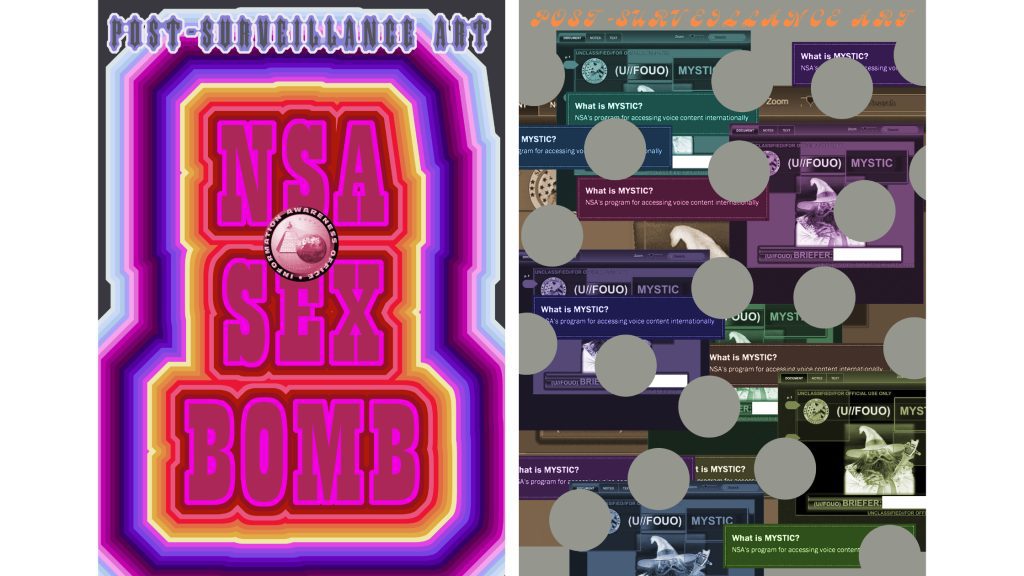
Snowden, Surveillance and Cultural Awareness
The trigger for this project was the public aftershock of Edward Snowden’s 2013 NSA leaks, which revealed that governments were conducting mass surveillance on ordinary citizens worldwide – collecting data from emails, phone calls, social networks, and online activity without public knowledge. The leaks exposed the scale and sophistication of intelligence operations, sparking global debate about privacy, legality, and the ethics of data collection.
For Treister, this was less a revelation than a confirmation. Her work had long explored surveillance and its impact, and the Snowden leaks validated her earlier HEXEN 2.0 project (2009–11), which connected cybernetics, the history of the internet, countercultural movements, and intelligence gathering, showing that surveillance was embedded in the very architecture of digital networks.
Yet after Snowden’s moment, most people continued to use social media and web platforms despite knowing their data was tracked. Post‑Surveillance Art reflects this paradox – the coexistence of digital visibility and apathy.
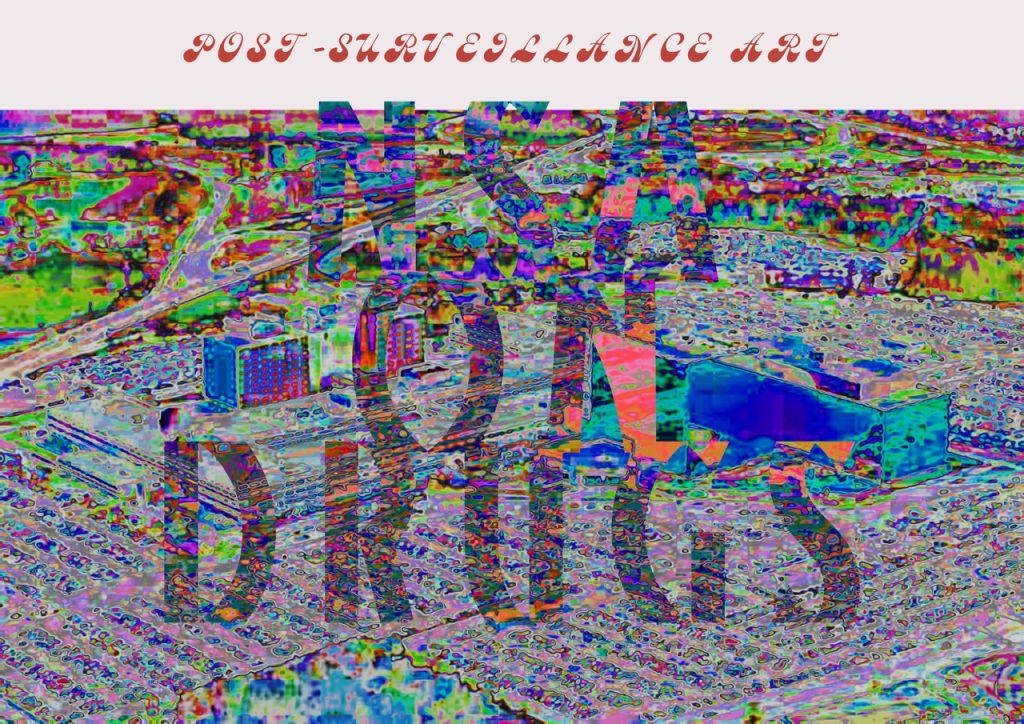
Mapping Control, Noise and Interpretation
Treister’s Post‑Surveillance Art operates at the intersection of information, politics and perception. It draws a picture of a culture that simultaneously:
- Knows it’s being watched
- Misinterprets or misrepresents political facts online
- Feels both empowered and overwhelmed by transparency
Treister uses detailed diagrams, textual overlays and layered visuals to make the viewer participate in interpretation rather than simply observe it.
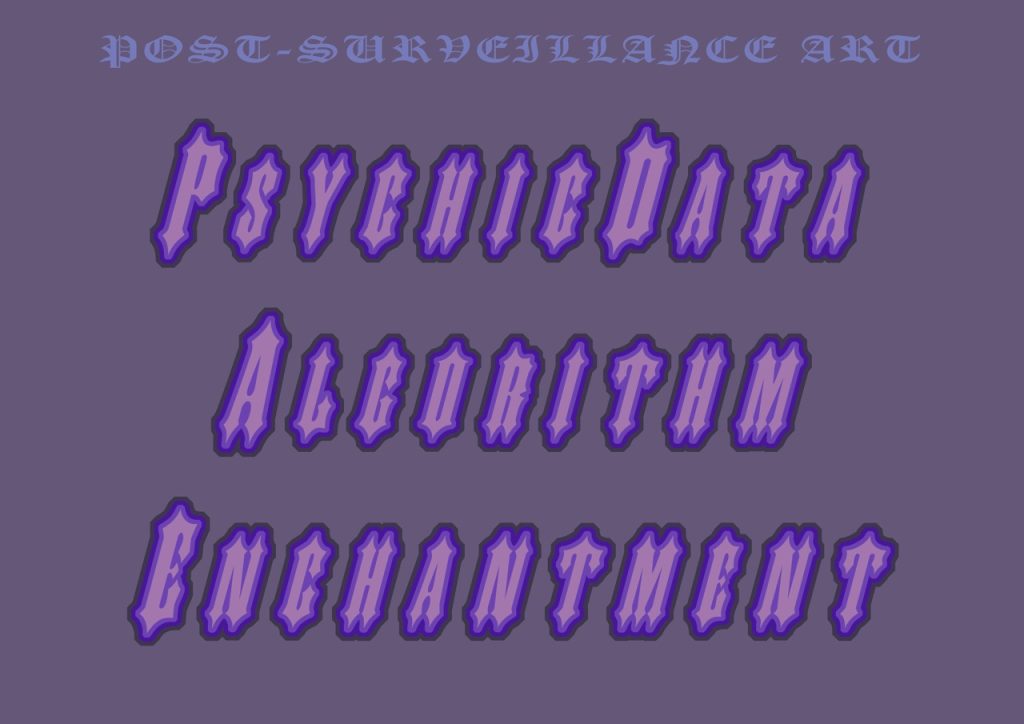
Why Post‑Surveillance Art Matters Today
A decade on, Treister’s Post‑Surveillance Art resonates deeply in a wA decade after Snowden’s revelations, the themes Treister explored in Post‑Surveillance Art – visibility, control, and the often uneasy relationship between awareness and action – remain central to debates about digital surveillance in the world today. Public discussion now extends beyond secret state programmes to include the everyday technologies shaping life under constant observation. For example, recent data shows that live facial recognition technology is being deployed more widely by UK police, scanning tens of thousands of faces per day and prompting calls from privacy advocates for stronger legal safeguards and clearer oversight.(Biometric Update)
Beyond government surveillance, corporations increasingly track our online behaviour to sell products and services in ways we often don’t notice. From social media platforms to e-commerce websites, companies collect browsing history, search queries, location data, and even offline purchase habits to build detailed profiles. These profiles are then used to serve personalised ads, nudging users toward purchases, subscriptions, or content tailored to their inferred preferences. This corporate surveillance raises ethical questions similar to those Treister explores in her work: if our actions, attention, and data are constantly monitored, how free are our choices really?
Taken together, these developments show that the questions Treister raised in Post‑Surveillance Art – how we see and are seen, how systems of control operate, and what it means to share knowledge in a surveilled society – are not only historically grounded but deeply resonant in the current context as technology, law and public values continue to collide.
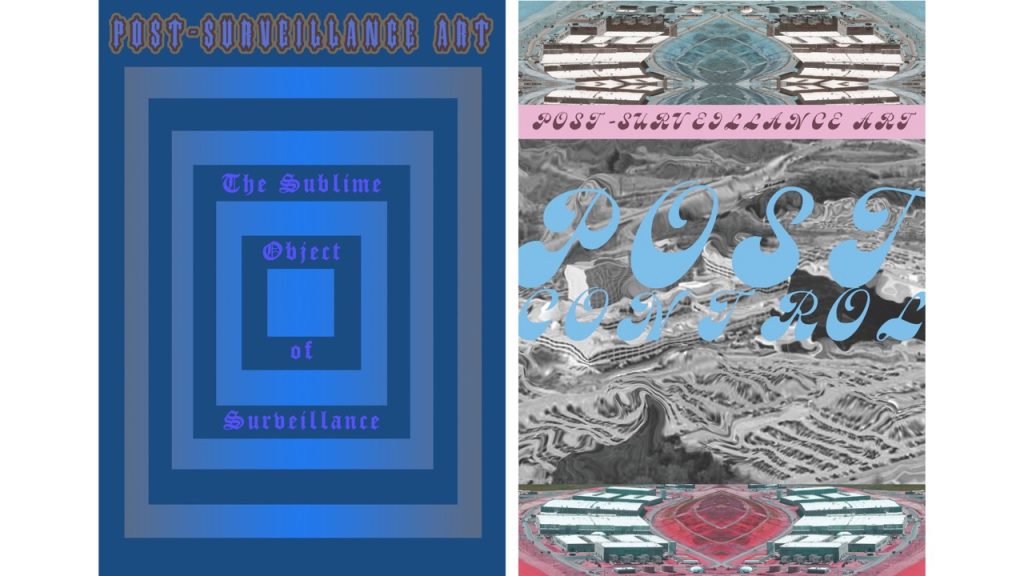
Suzanne Treister: Prophetic Dreaming is on show at Modern Art Oxford until 12 April 2026.